Be yourself; Everyone else is already taken.
— Oscar Wilde.
This is the first post on my new blog. I’m just getting this new blog going, so stay tuned for more. Subscribe below to get notified when I post new updates.
Be yourself; Everyone else is already taken.
— Oscar Wilde.
This is the first post on my new blog. I’m just getting this new blog going, so stay tuned for more. Subscribe below to get notified when I post new updates.
The past two weeks have been a complete whirlwind. I was preparing for the end of my time on the Taylor Bennett Foundation PR Training Programme when the world suddenly had to deal with the threats of a pandemic. Cue several online video conference calls and a lot of changing schedules.
However, the chaos of the past few weeks has summarised my ethos for the Taylor Bennett Foundation perfectly, the importance of never quitting. Despite being quarantined and unable to attend our last few masterclasses, Gabrielle and Melissa have ensured that we could gain all that we can the last few weeks.
I have learned a lot during my time with the Taylor Bennett Foundation, I have met so many amazing individuals and visited more agencies than I could have ever imagined. There have been so many important lessons which I will implement in my career moving forward. Most importantly, the significance of networking. The Taylor Bennett Foundation has an extensive alumni network, who has helped me consistently throughout my time on the programme. You are rarely able to access such a wealth of knowledge and experience from these many individuals. I have previously written about the issues surrounding diversity in the PR industry. It is refreshing to see so many people who have gone down the same TBF path, have such success in their respective fields.
The masterclasses. The Taylor Bennett Foundation has a lot of things that make it stand out, the masterclasses are just one of these aspects. Whether it was the interactive session at The Guardian or the practical advice given by PRCA, TBF ensures you truly gain an immersive experience. Not only can you network with more people than you could ever imagine but more importantly, you are accessing vast amounts of information from a range of companies. The opportunity is truly one of a kind and sets the Taylor Bennett Foundation PR Training Programme apart.
To my host agency, FTI Consulting. I have had the most amazing time working alongside FTI and I was lucky enough to receive two wonderful mentors. Every Thursday we had the chance to learn about a different section within the FTI Consulting Strategic Communications department. I cannot understate how important these sessions were for my personal development. Where else can you present to a Senior Managing Director in your first week, or get questioned ‘The Apprentice’ style? The HR team in combination with the TBF alums working at FTI ensured that we were always supported and well equipped to complete our tasks. Everyone was so accomodating and the culture of the company was just a breath of fresh air. I also want to extend a thank you to the FTI Consulting Brussels office. We had the opportunity to spend a week in Belgium, learning about public affairs and gaining real insight into the inner workings of the EU parliament. The whole experience was eye-opening and helped to highlight the global offerings of FTI Consulting.
I am proud to say that in September, I will be joining FTI Consulting as a Graduate Consultant. I cannot wait to get started!
Finally to my cohort,
I couldn’t imagine spending 10 weeks with any other group of people. I have to keep this brief because we all could rave about how much fun we’ve had. I truly feel like I have gained friends for life. We have all supported one another and I couldn’t be more proud for all that we have achieved. Thank you for being there for me through the ups and the downs (being sick during Brussels!). I know this isn’t goodbye, so there’s no need for niceties. However, I will miss seeing you all daily!
Thank you all for reading and to the next set of Taylor Bennett Foundation trainees, you are in safe hands and are in for one hell of a ride!
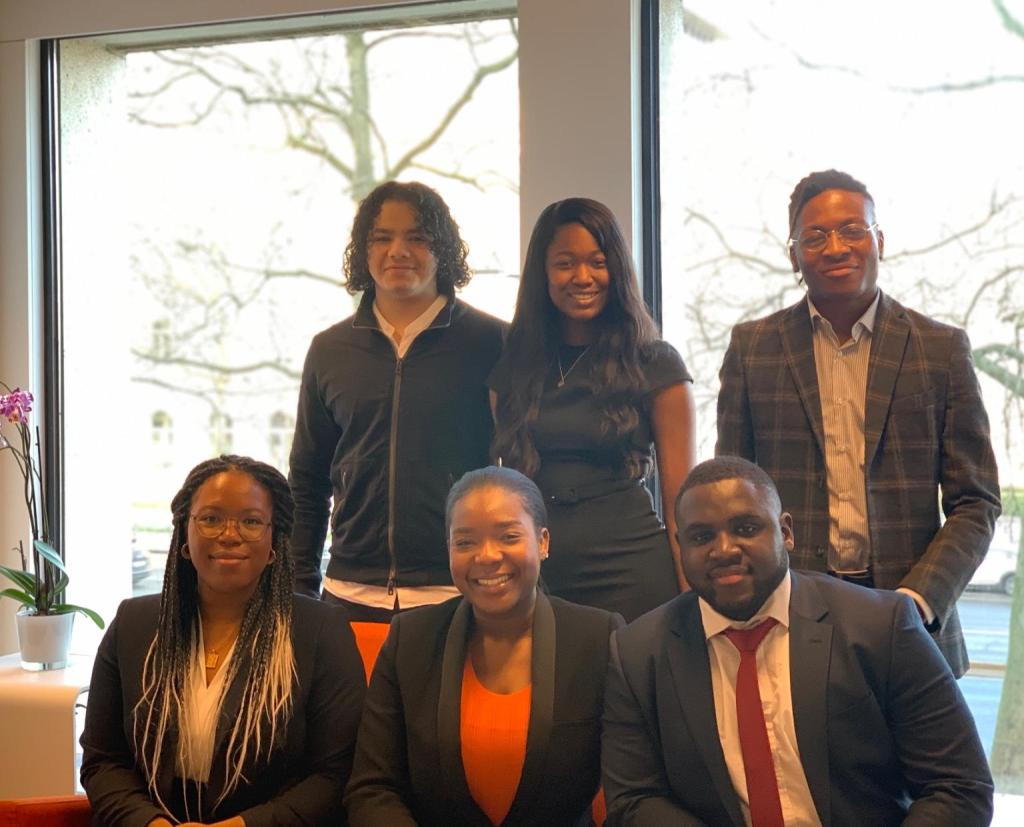
It is now week 8 for me on the Taylor Bennett Foundation programme, what a time it’s been so far! I have had the opportunity to visit so many agencies, network beyond belief and experienced insight from various industry experts through several masterclasses. To say that the programme has been invaluable, would be an understatement.
However, this poses the question, why does the Taylor Bennett Foundation even exist?
Taken from their website – the Taylor Bennett Foundation is a charity that exists to encourage black, Asian and minority ethnic (BAME) graduates to pursue a career in communications. Headlines by its award-winning PR training programme, the foundation also offers numerous internships and mentoring programmes. The alumni network is extensive, impacting all aspects of the industry. Companies across the PR and communications sector are reaping the benefits of the Taylor Bennett Foundation and its graduates.
With such a lack of diversity, why is the TBF receiving the majority of the onus for change? From all of the agencies I have visited, I have always heard about how change and diversity of thought are required. However, there has not been a universal answer for how the industry can achieve that growth. Certain companies have suggested that BAME candidates are simply not interested. Others would argue that there is a lacking talent pool. For all the speculation, there needs to be greater action than everyone piggybacking off the work of one charity. Someone summed up the Taylor Bennett Foundation perfectly, “the work they do is amazing, their effects can be seen, but there has to be a better way of improving the industry, rather than simply doing it 6 people at a time”.
To me, the main issue regarding diversity in PR is a lack of access. For many people within the industry, PR was a career path they stumbled upon. Ironically, PR has a public relations issue, with many graduates unaware of the industry. I believe if more BAME graduates were given insights about the industry, this would help increase the talent pool. Portland Communications are always at university career fairs, but where is everyone else? Another issue regarding access comes from the necessity to network. Since I’ve started the TBF PR training programme, I have quickly seen the power of networking. For many BAME graduates, they do not have the gateway to access large networks to further their careers. I believe if more companies looked to adopt a model similar to the Taylor Bennett Foundation and actively looked at investing money into developing BAME candidates, the industry could see mass growth.
Increasing diversity within the PR industry can only provide benefits. With a greater diversity of thought, PR disasters such as the H&Ms clothing campaign could be avoided. There is also the opportunity to enter new markets with more nuanced information. Most importantly, our society is seeing massive changes occur. With gender diversity being such a topical subject, sustainability and racial diversity are seeing that same spotlight. It takes bravery for a company to actively seek to make a difference. However, the potential difference that this investment in BAME talent can make within the PR industry is gigantic.
It’s time to stand up.
For many in the communications industry, the hope is to secure coverage and gain exposure. Whether that is a spread in the Financial Times or an interview on Good Morning Britain, but we can never forget, for all the good times, there are many pitfalls we need to avoid.
On the eve of International Women’s Day 2017, State Street Global Advisors partnered up with the McCann World Group to introduce Fearless Girl to the world. The statue of a young girl standing up to the Raging Bull on Wall Street became a global phenomenon in a matter of hours. Fearless Girl represented the strength of women and the importance of female representation within leadership positions. The statue garnered over 1 billion Twitter impressions in the first 12 hours and 405 million Instagram impressions in 6 weeks, clearly a massive hit! The campaign masterfully demonstrated the global support towards female empowerment.
With the prominence of the #MeToo movement, several companies developed strategies hoping to create a call to action supporting women across the globe. Unfortunately, not everyone was able to strike gold like the Fearless Girl campaign! Procter and Gamble just so happened to be one example of these unsuccessful companies. Presenting – We Believe: The Best Men Can Be.

Running around three months after the #MeToo movement had gained global traction, Procter and Gamble decided to roll out an ad for Gillette which to many failed to encapsulate positive messages of empowerment. Rather than provide positive examples of gender equality, the ad presented most men as sexual harassers and a society filled to the brim with male toxicity. The ad faced massive vitriol across several media platforms, across the gender spectrum. Celebrities such as Piers Morgan came on national television in defence of men across the world, many of whom felt attacked by Gillette’s ad. Social media was no safer for Gillette, with many individuals sarcastically mocking the ad and highlighting the flaws of their campaign. The effects of the ad were devastating, a week after first airing, Gillette’s YouGov Brand Index score dropped to -3.4. In a ranking of 45 health and beauty brands, Gillette dropped from seventh, all the way down to the bottom.

The key lesson from the Gillette was their failure to analyse their audience and gain a strong understanding of their motivations. The company hoped to jump on a growing trend, but instead of empowering females, they chose to attack men. Although the ad had begun as a positive campaign, Gillette demonstrated how a poorly executed idea, can quickly escalate into a PR crisis.
So, for any company hoping to create a new campaign, please make sure you have a strong understanding of your stakeholders!

These past few weeks have been a massive whirlwind, preparing presentations, visits to multiple agencies and many a tube journey. However, if there has been one thing that has been the staple for my time on the Taylor Bennett Foundation Programme, the word that stands out is NETWORKING.
My Linkedin connections have risen tenfold. A large percentage of these new connections have been alumni of the TBF Programme, having the opportunity to meet so many individuals has been invaluable. We have met both those starting their careers and well-established veterans willing to give us useful advice.
This blog post aims to honour one of the many TBF alumni, Poppy Hemmingway, Account Executive for Spark44.
Who is Poppy Hemmingway?
A University of Leicester graduate in 2018, Poppy was on the Taylor Bennett Foundation Programme in 2019. She then found herself working for Spark44, which is the first global client/agency joint venture. The company boasts two major clients in Jaguar Land Rover and Tetley Tea. Although, Poppy does occasionally work on the Tetley account, its the JLR account where she makes her bread and butter.
I wanted to learn more about the role of Account Executive and the ins and outs of Poppy’s day to day dealing. I came to figure out, like many in the industry, no day is ever the same. For Poppy, tasks can vary depending on various factors. Some days involve dealing with a client, others running social media accounts and often new briefs need to be handled. Poppy’s summary of her role was that of the middle person when it comes to communication between a client and the creative team. For an account, this connection between the two is very critical.
How did you find yourself here?
One of the many interesting things about Poppy’s own TBF alumni story is unlike the majority of those I have met, she is not currently working in the communications/PR sector. Spark44 is a marketing/advertising agency, however, for Poppy, there were many aspects of her job that overlapped with the skills she developed on the Taylor Bennett Foundation Programme. The main focuses on her job tend to centre around social media, online advertising, sponsorships and website imagery, amongst other things. Poppy is the perfect poster child for the ever-blurring lines between marketing/advertising/communications and PR.
What sparked your interest in the industry?
The ability to work in a sector that was able to influence an audience was always important to Poppy. At the University of Leicester, studying Media and Communications helped open her eyes in regards to the various impact of different forms of media. Marketing has allowed Poppy the opportunity to enter a sector which is ever-changing and growing and has helped promote that same development within herself. Despite currently enjoying working in marketing, Poppy would not rule out a move to PR in the future, especially as both industries share interchangeable skills.
How did you discover the Taylor Bennett Foundation?
Some things can only be described as inevitable. Inevitable is the best way to describe Poppy’s discovery of the Taylor Bennett Foundation. Following an initial Google search, Poppy was made aware of TBF, unfortunately, she just missed out on the recruitment period. Fast forward a few months, she rediscovered TBF through Google searches and recommendations from creative job websites. Grasping this opportunity with both hands, Poppy took this as a sign and successfully secured a place on the programme. Alongside getting that helpful push into the industry, Poppy mentioned the gratitude she felt towards the TBF community she was able to join.
What did you learn on the TBF Programme?
During her time with TBF, Poppy was able to learn many useful pieces of information.
ASK as many questions as possible.
Poppy emphasises the importance of asking throughout the experience on TBF as well as moving into your future careers. Whether it’s work or the training scheme, you are there to experience as much as possible. One massive benefit is you are allowed to make mistakes and use them as learning opportunities, which will boost your experience. However, Poppy also mentions the other benefits of asking, like asking to be on a project. Showing proactiveness can make you look good and is a form of active listening that people will take note of.
How was the transition in your career and what does the future have in store?
Rather than finding the transition difficult, for Poppy, the transition was different more than anything. Moving from like-minded, similar-aged individuals, to a being thrown in the deep end, with individuals with potentially completely different experiences than you. This can be a big shock.
However, the TBF programme did provide a lot of experiences that have been useful to Poppy in her transition to full-time employment. The nature of the scheme, meeting different agencies, travelling across London and mirroring a full workday provides the core concepts of work-life.
What is your favourite thing about your job? What are the most challenging aspects?
Monday is a key opportunity for Poppy and her team to discuss their highlight of the week and on/upcoming work. This helps Poppy figure out what needs to be focused on and figure out anything that is missing with the rest of the team.
One aspect of working at Spark44 that Poppy loves is the opportunity to work with such well-known brands. Hearing about the previous work of others and the new upcoming briefs can be very exciting.
A challenge that Poppy faced when joining the team was replacing a well-established member of the team. With how busy everyone was, it was initially difficult to find people to give up time and show her how certain things worked.
How do you balance work and your social life? What do you do in your spare time?
Despite all of the work Poppy has to do, she makes sure to prioritise meeting friends and do as much as possible on the weekend. Since a lot of her friends are back home from university, she’s able to meet them a lot more. She also makes sure to balance work-life with her relationship, making time to see him on the weekends. Surprisingly, work-life balance has been easier than expected for Poppy. For her to do well in a working environment, having a break is critical.
Where do you see yourself in 5 years?
Although Poppy has loved her career so far, the more she works, the more she sees herself becoming her own boss. The opportunities are endless, perhaps she might start her own agency, or figure out what the industry missing and figure out how she can help combat that. If all that doesn’t come to pass, she is not ruling out a move into PR, the goal is to switch up her career and try out as much as possible. Poppy’s future plans don’t stop there, there’s even the potential for a career in television or film production. All the skills she’s building as an Account Executive can truly be translated into numerous roles.
I would like to extend a huge thank you to Poppy for taking the time to be interviewed for my blog. It is always a great opportunity to network with other Taylor Bennett Foundation alumni and to hear about how their careers have developed since completing the programme.
Professionalism,
A phrase we always hear, but what does professionalism look like within the PR work environment. This blog will analyse the key attributes required for upcoming entry-level PR practitioners.
TIMELY
The importance of time management cannot be understated. Whether it is meeting a major deadline or simply arriving on time for a coffee meeting, punctuality is key.
It does not take a long time to realise how many new people you meet daily within this profession. Timeliness can be influential in creating a good first impression. We also mustn’t forget that more often than not, we are relying on working within a team environment. A massive element of trust is required, to ensure that each member can work towards an agreed schedule.
RESPONSIBLE
Everyone remembers their parents telling them to act more responsibly. However, what is that in the workplace and how can we make sure we are adhering to this value.
Being responsible is not just about completing tasks and following rules, ultimately it boils down to culpability. Being an entry-level PR practitioner does come with an area of understanding, but this cannot be used as an excuse. Throughout your work, there will be opportunities to partake in roles that may demand greater autonomy. This inevitably will add pressure but this should be used as an opportunity for growth and further development. To truly become responsible in the workplace – is to become an individual who is reliable, helpful and confident enough to achieve a task – but also to know when to ask for support.
COMMUNICATION
A PR professional having to be a strong communicator is no surprise to anyone. Our sector involves continuous interactions and an element of story-telling. Therefore, it is imperative, that we can effectively communicate our message.
Communication goes beyond simple conversation, it can be viewed as the way we work alongside other individuals. To be a good communicator, you need to be an excellent listener, who can respond to those around them in an appropriate fashion. There is also the need to be understanding of different cultures and communities. Our world is more global than ever, to be a strong communicator, you need to be able to make everyone feel comfortable.
Starting as an entry-level PR professional comes with many challenges, but there is a lot that can be gained from the role. The opportunity to work alongside colleagues with vast amounts of experience is invaluable. It can often be challenging to manoeuvre learning, alongside demonstrating your capability. There are other facets you need to be aware of, such as managing appropriate dress-code and ensuring you are adequately prepared on a day to day basis. Nevertheless, time and experience are the greatest teachers. This is only the first chapter of an amazing journey.
The world of public relations provides its habitants with an ever-changing work environment. At a moments notice global news can suddenly break, which can potentially cause massive ripples across the PR spectrum. With the growth of technology and the world being, more well-connected globally than ever before, PR professionals everywhere are seeking continuous, up-to-date insights within the sector.
This desire to discover the newest trends and the latest news has led to an influx of Public Relations materials online, each wanting to fill this void. Several platforms have emerged through the sea of competitors to become leading figures in the development of an online PR presence. However, with so many mediums being made available, the choice can be overwhelming. This blog shall analyse four major PR publications and assess how they compare to one another.
When discussing websites and publications, naturally there tends to be unintentional bias in-play. To help combat this issue, a 5-point criteria system, helped to assess each platform. The five evaluating factors for the review were: accessibility, design, content, technological interactivity and originality. The main aim for each site is to provide relevant information, which is useful to PR professionals, in easily-digestible fashion. I have opted to pick four publications that personally interest me; Ragan’s PR Daily, PR Week, PRSA and The Holmes Report.
Having engaging content is key for any successful publication. Content needs to be relevant. The website needs to be easy to use and provide clear information.
PR Week’s website is quite easy to navigate due to having a helpful toolbar. Users can quickly select news from specific sectors. PR Week allow users to jump between their Asia, USA and EU websites with one click, increasing global content accessibility. Unfortunately, for all the positives, there are several issues. The PR Week website uses borders for promotional opportunities. These can be very distracting when reading the main headlines. There also remains the issue of constant ad pop-ups, the pop-ups are too frequent. However, if you can ignore the distractions, the website does provide useful information. The job search feature also helps to provide an added feature to the website. Articles on the website are given clear, engaging headlines, however, the images are bland. Ultimately although PR Week offers great information and useful additions, the website is very confusing. There are too many different things in view at one time. Despite all of this, the biggest disappointment is the sign-up requirement. Articles are not accessible without having a registered account, this can be very frustrating for new audiences.
3/10
Next up – Ragan’s PR Daily.
PR Daily offers a much friendlier viewing experience compared to PR Week. The page is not overpacked with articles, and the toolbar at the top is well utilised. PR Daily articles are freely accessible to new audiences, another bonus. Although the website also does use advertisements, they are not dominating the screen. The articles are easy to read and the search function helps to improve the experience. Ragan’s website provides its viewers with interesting content via different platforms such as Youtube. The content here is useful for those well-versed in comms and those looking for a casual read and greater insight. Personally, I am a fan of the way this website is set out. I like how they know what they are. Ragan’s does not want to do too much, they just want to deliver the latest news easily. If you are looking for your first taste in communications trade news, this could be for you.
6.5/10
PR Say is next on the list. I have to say I did enjoy saying that name out loud, it rolls off of the tongue. They claim to be the voice of Public Relations and it is easy to see why. The first notable aspect of the site is the interactive menu bar. I love this function and honestly, I am shocked that the other sites have not implemented their own versions. Whether you are here for the daily news articles, or for more in-depth training tips, PR Say is perfect for your needs. They can engage with multiple audiences and they do a good job of using technology to make sure they cover all of their bases. Although it’s a simple feature, the use of video content on the website pages helps to increase audience retention. I personally love the content on PR Say, not only are you able to find real-life PR conversations, but you are also able to further your own personal knowledge and insight. I feel that PR Say are unlucky to come in second because the website has a lot of positives. Their media content on other platforms equally matches the high standard.
8.5/10
Finally, we have the Holmes Report. I hope all the other publications are ready for a seminar on how to deliver PR and comms news. To put it bluntly, this website is as close to perfect as you are going to get. Firstly can we discuss the colour scheme? The design on this website is so aesthetically pleasing. You could know nothing about comms or PR and simply stay because of the visual effects of the website. Not only that but in terms of creativity and content, only PR Say is even in the same ballpark. The Holmes Report has a bit of everything, for everyone. The lists and ranking provide a lot of interesting conversation and the premium content definitely adds to the website’s intrigue. Each of the previously discussed websites has their own styles, but there are aspects which seem to be lacking. The Holmes Report appears to hit all of the key criteria and then some. It is hard to fault this website and the only thing stopping it from reaching a perfect score is the fact some may be turned away from the lack of video content.
9.5/10
Have a WordPress.com account? Log in now.

